Characterizing the Impact of Air Currents on Droplets and Aerosols' Dispersion
Active project
Abstract
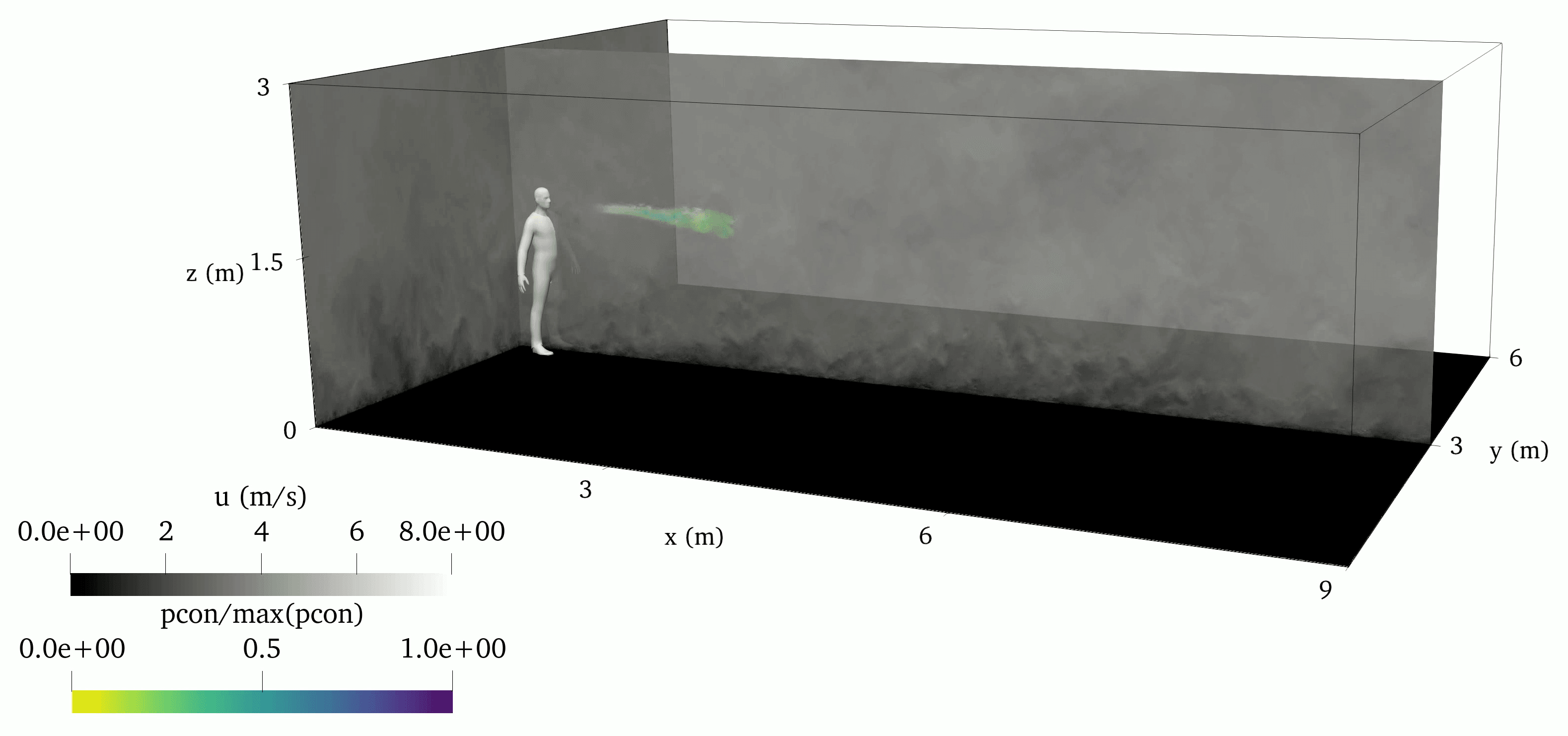
The current six-feet distancing guideline is too simple to be valid over the full range of circumstances under which COVID-19 transmission might occur. Traditional respiratory disease control measures are designed to reduce transmission by relatively large droplets produced in the sneezes and coughs of infected individuals, but a large proportion of the COVID-19 spread appears to be occurring through airborne transmission of aerosols produced by asymptomatic individuals during breathing and speaking. While large droplets fall relatively rapidly and thus do not reach distances far from the source (at least in the absence of wind), smaller droplets and aerosols can be transported farther by ambient air currents and accumulate and remain infectious in indoor air for hours, thus increasing the risk of contagion. An evidence-based approach is hence needed to quantify the risk of droplet and aerosol transmission, determine the conditions conducive for such transmission, and detail how this risk varies by environment and building structure. The goal of this project is to characterize the impact of air currents on the dispersion of polydisperse (varied size) droplets and aerosols. We will carry out high-fidelity computational fluid dynamics simulations of droplet and aerosol dispersion in turbulent flows and analyze results to understand how air currents impact the range of dispersion. Such findings would provide guidance and inform social-distancing efforts in a variety of settings, including hospitals, grocery stores, financial institutions, classrooms, dorms, parks, and streets.
Results (0)
PI
Marco Giometto; Columbia University in the City of New York