Guiding Drug Repurposing for COVID-19 Using Highly Informative, High-throughput, and High-level Fragment Molecular Orbital (FMO) Calculations.
Active project
Abstract
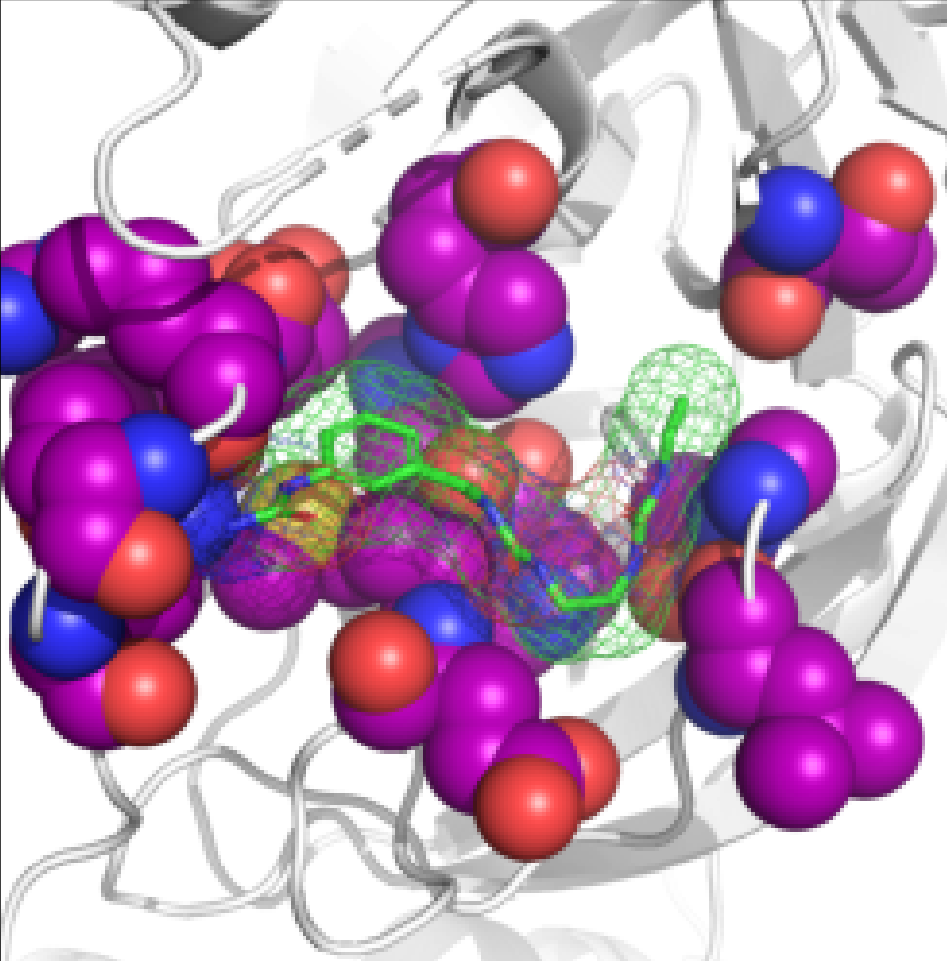
The goal of this project is to use high-level quantum calculations to guide drug repurposing efforts for COVID-19. Recently, there have been many reports on using molecular docking calculations to identify known drugs that may inhibit the replication of SARS-CoV-2 and, in so doing, stop the spread of COVID-19. In most of these reports, approximate scoring functions were used to estimate the binding energies of drugs to various SARS-CoV-2 protein targets. These scoring functions, however, are known to lead to many false-positives and presumably many false-negative predictions.\nMispredictions result in wasted time and resources testing compounds that are inactive and missed opportunities to identify truly bioactive compounds. Instead of binding energies estimated with simple scoring function and techniques, we propose using the high-level fragment-molecular-orbital (FMO) method to accurately and rapidly predict the binding energies of compounds in a drug repurposing library to the main protease of SARS-CoV-2. The main protease of SARS-CoV-2 processes polypeptides necessary for viral assembly and replication. Using the calculated binding energies, we will identify which known FDA approved drugs are likely to bind to known molecular targets in SARS-CoV-2. Beyond allowing binding energies to be accurately and rapidly calculated, FMO calculations produce individual drug-residue interaction energies that can guide the strengthening of drug-protein interactions and, in turn, enhance drug efficacy. Once completed, we will disseminate our results to the research community via the COVID-19 Molecular Structure and Therapeutics Hub (https://covid.molssi.org). COVID-19 Molecular Structure and Therapeutics Hub, hosted by MolSSI (Molecular Sciences Software Institute) and BioExcel (Centre of Excellence for Computational Biomolecular Research), is an active, community-driven repository that is dedicated facilitating computational COVID-19 drug-development research.
Results (0)
PI
Aaron Frank; University of Michigan