Dynamics and Mitigation of SARS-CoV-2 Laden Droplet Clouds in the Hospital Environment
Active project
Abstract
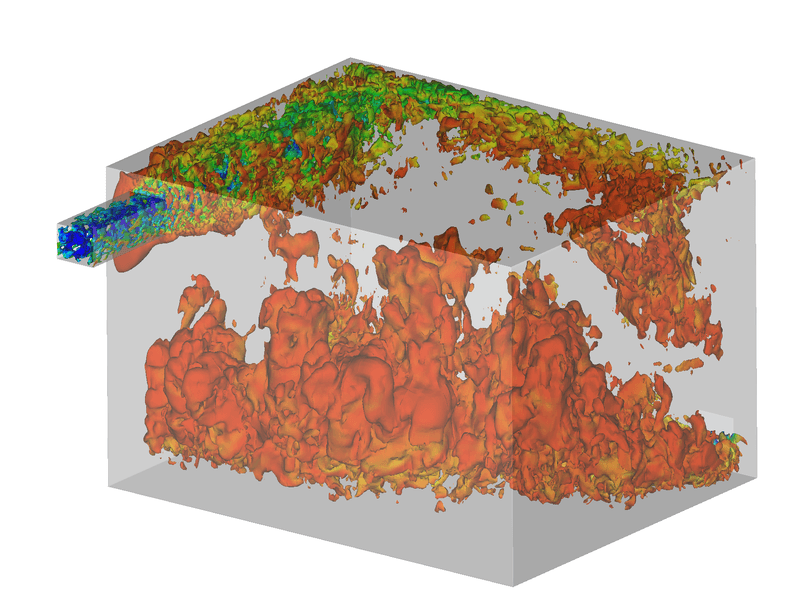
SARS-CoV-2 is sweeping the world, but our current understanding of transmission pathways in hospitals and other critical indoor areas is lacking. The major point of contention is about viability of air-borne transmission, which is partly fueled by a lack of mechanistic understanding of how virus-laden droplet clouds get transported and mixed within the indoor environment. The aim of this study is to fundamentally improve our understanding of person-to-person transmission of airborne respiratory infectious diseases like COVID-19. Our findings will help scientist develop non-pharmacological measures to reduce the droplet-based viral loading in a room, making it safer for health care professionals (HCPs). The hypothesis is that aerosolized droplets from human airways contaminate rooms more significantly than currently expected. We will use high-fidelity multiphase large eddy simulations (LES) to determine the dynamics of the virus-laden droplet-cloud in an idealized hospital setting, to understand how long the pathogen-cloud persists and where the particles settle. The final goal is to device simple non-pharmacological methods to reduce the virus-loading.
Results (0)
PI
Som Dutta; Utah State University