Dissecting inhibitor impacts on viral RNA polymerase and fidelity control of RNA synthesis in SARS-CoV-2
Active project
Abstract
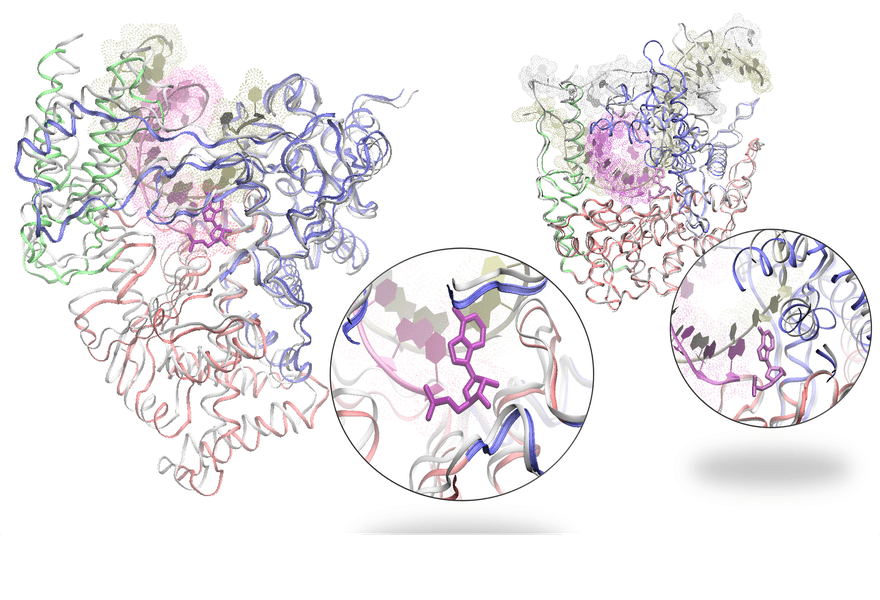
Finding antiviral drugs for curing COVID-19 is one of the most critical endeavors to fight against the pandemic. Among very few potential choices, Remdesivir (RDV, or GS-5734) is a promising broad-spectrum anti-viral compound, developed originally for treatments of Ebola virus disease (EVD), and then applied for infections of Middle East and severe accurate respiratory syndrome coronavirus (MERS-CoV and SARS-CoV), which are both close relatives to the novel coronavirus 2019-nCoV or SARS-CoV-2. RDV acts as a prodrug of a nucleotide analog to interfere with the function of RNA-dependent RNA polymerase (RdRp), a key component of replication-transcription machinery encoded in the genomes of all RNA viruses to conduct RNA synthesis. The viral RdRps are highly conserved, sharing a common core structure of a right-hand shape as many single-subunit DNA-directed polymerases. A cryo-EM structure of RdRp from SARS-Cov was established last year, illuminating the assembly of the coronavirus core RNA-synthesis machinery. Recently this year, a similar high-resolution structure of RdRp is presented for SARS-CoV-2 (pre-print), which provides a basis for a detailed structural dynamics investigation of the core RNA-synthesis machine, as an antiviral drug target for the current pandemic, and possibly future ones. The research goal of this proposal is to probe how such a coronavirus RdPp (or Cov-RdRp) directing the RNA synthesis conducts fidelity control, and how potential drugs such as RDV and other inhibitors impact RdRp functions. Mutant RdRps capable of gaining drug resistance can also be considered. The research team of this proposal had systematically studied elongation dynamics of a viral RNA polymerase (RNAP) from bacteriophage T7, which shares the same right-hand structure with the core Cov-RdRp. The transcription fidelity control of T7 RNAP has been examined, revealing unprecedented structural dynamics and energetics details on how various nucleotides bind to the active site and are subject to stepwise selections during each nucleotide addition cycle (NAC). Along this line, the research team plans to study how a nucleotide analog such as RDV binds/inserts into the active site of Cov-RdRp, subject to nucleotide selections while evading from further proofreading. Subsequently, other analogues and inhibitors can be examined; variant RdRps can be probed for drug resistance, and a similar human mitochondrial RNAP can be tested for side effects or toxicity.
Results (0)
PI
Jin Yu; University of California, Irvine