Artificial intelligence driven integrative biology for accelerating therapeutic discovery against SARS-CoV-2
Active project
Abstract
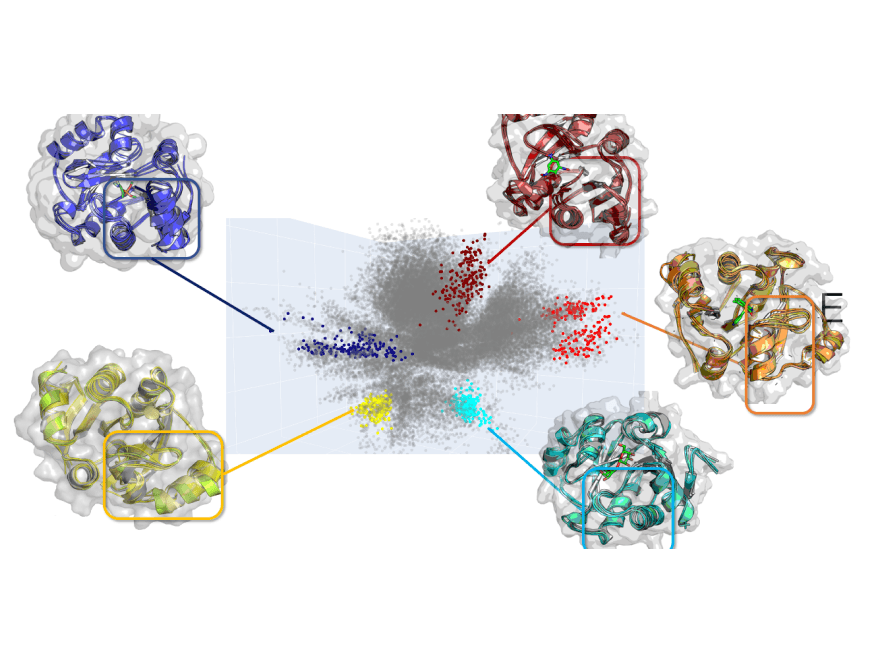
Our proposed work seeks to address both the fundamental biological mechanisms of the virus and the disease, while simultaneously targeting the entire viral proteome to identify potential therapeutics. Our computational effort complements experimental laboratory efforts at Argonne, the Diamond Light Source (UK), as well as the Frederick National Lab for Cancer Research (FNLCR). The overall effort includes team members from multiple laboratories (Argonne, Brookhaven), universities (University of Chicago, University of Illinois, University of Virginia, Rutgers University, Stony Brook University, George Mason University, University of Texas, University of California San Diego, University College London), and private research centers (JC Venter Institute). Our proposed work will develop machine learning (ML), deep learning (DL) and artificial intelligence (AI) techniques to: \n(1) identify, and build accurate three-dimensional structural models of the SARS-CoV-2 proteome by closely integrating experimental structural and systems biology datasets, \n(2) accelerate adaptive conformational sampling of the viral proteins to potentially identify novel binding sites/ pockets that can be targeted by small molecules, \n(3) rapidly filter, rank, and search for small molecules across widely available chemical libraries and to integrate virtual screening (computational drug discovery techniques) techniques with experimental high throughput screening, \n(4) enable multi-scale, multi-resolution simulations of the SARS-CoV-2 viral envelope, and specific proteins, and \n(5) characterize the evolutionary ‘traits’ of the virus including identification of epitopes and the viral genome that can be targeted for vaccine design.\nThe immediate impact of our current research is to build an ecosystem of open source AI/ML tools and conventional physics based simulations that can accelerate timely response for treating such pandemics. We have made significant progress across the aforementioned goals, including the development of AI/ML tools for rapidly filtering chemical space to identify small molecules that can bind to various viral protein targets, adaptive conformational sampling using molecular dynamics (MD) simulations, and building all-atom models for the entire viral envelope. Further, our approaches leverage open source software and tools that have already been tested on leading high performance computing facilities across the country. In addition, all of the data, computational tools and software will be released into the public domain to enable easy access, sharing and dissemination for further research.
Results (0)
PI
Arvind Ramanathan; Argonne National Laboratory