Designing virus-specific sACE2 mimics for competitive inhibition of SARS-CoV-2
Active project
Abstract
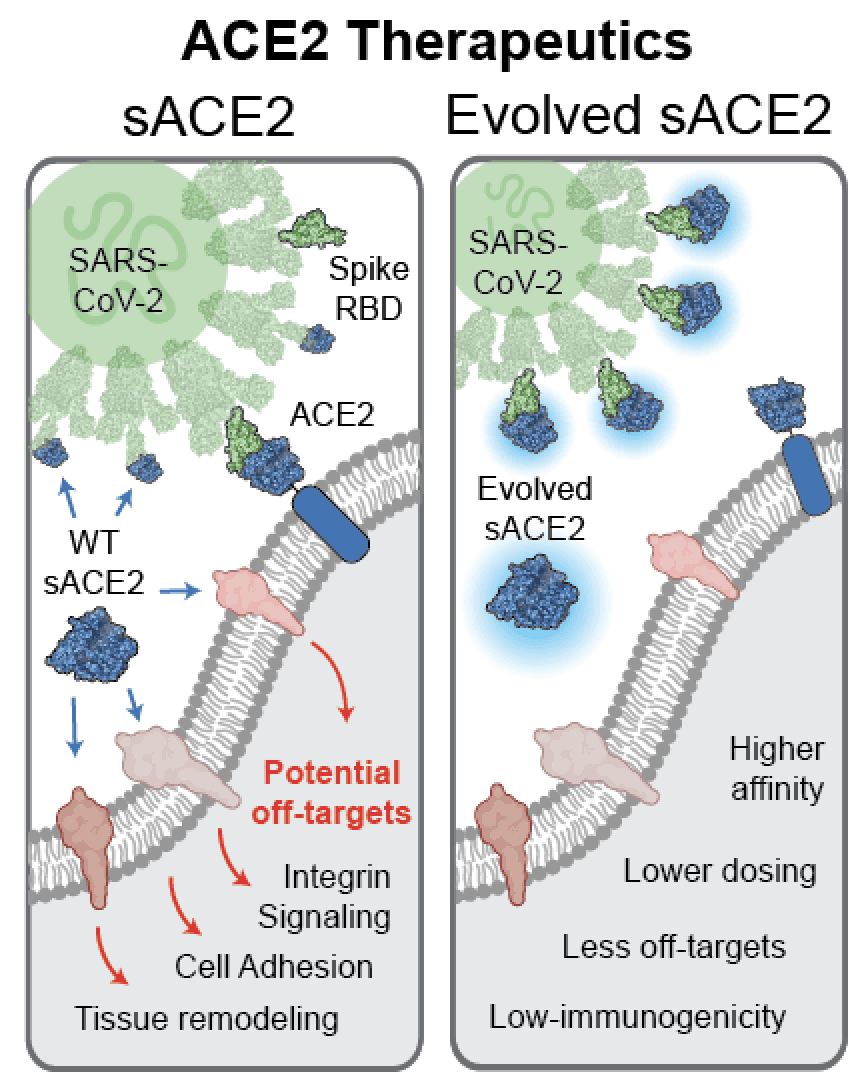
SARS-CoV-2 enters cells using the ACE2 receptor, which can be liberated into a soluble form (sACE2) that also binds the viral spike protein. There is an ongoing clinical trial of recombinant human sACE2 as an evolutionarily stable and non-immunogenic competitive inhibitor. However, sACE2 exhibits other biological roles including integrin signaling regulation, which likely limits the amount that can be safely delivered and its overall therapeutic effectiveness. We propose to use HPC Consortium resources to computationally design multiple sACE2 mutants exhibiting picomolar spike protein binding and reduced endogenous signaling activity using our recently developed UniRep protein representation and "low-N" in silico evolution platform (10.1101/2020.01.23.917682). Because the designed variants will be more effective at viral inhibition per molecule while enabling higher doses due to their decreased effects on native signaling pathways, we hypothesize that they will be capable of inhibiting viral entry much more effectively in patients. We will iterate the design process in a matter of weeks, rapidly test the variants in the laboratory and in animal models, then transition into pre-clinical and clinical trials as quickly as possible in order to save lives.
Results (0)
PI
Kevin Esvelt; Massachusetts Institute of Technology